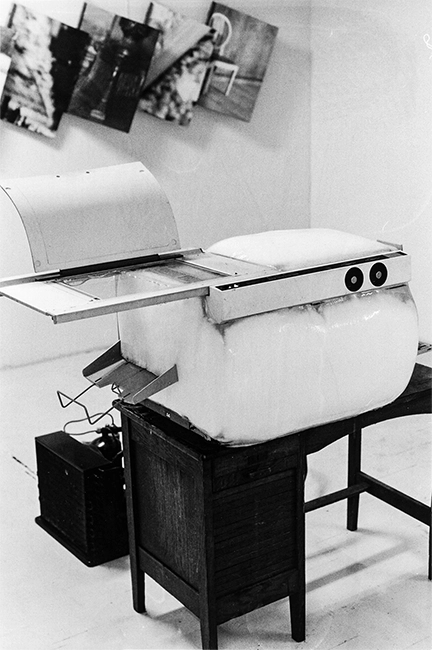
Installation
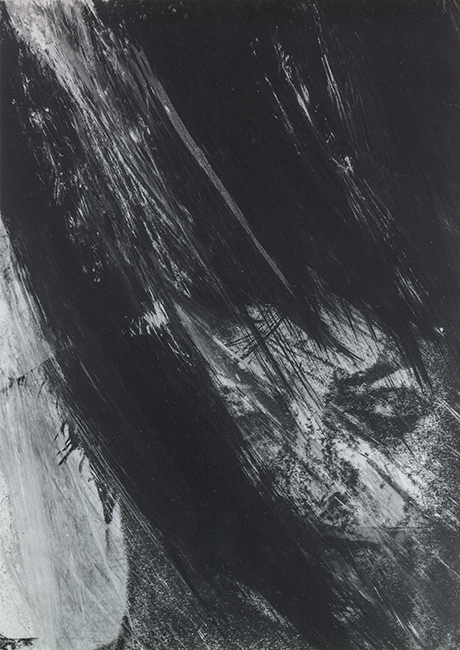
Xerox
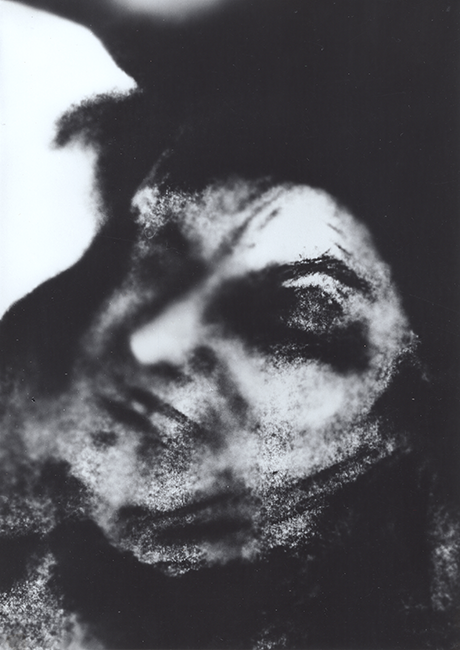
Photogram/Xerox
Rosy Beyelschmidt – Copy Portraits
Art created with a photocopier is still regarded as something unusual today. One reason is certainly that photocopying is an everyday activity for everyone, and the process itself is generally considered non-artistic. Another reason is that neither painters, draftsmen, nor photographers can readily identify themselves with this technique. In short, it does not fit into conventional artistic categories. Yet aren't millions of photographs taken every day? And aren't countless works continually produced in painting, drawing, and printmaking whose status as art is equally open to question?
Ultimately, working with the photocopier also has its roots in the history of art, particularly in camera-less photography, photograms, and gelatin silver experiments. At the same time, it points toward future developments such as electronic photography, whose computer-generated images emerge from technologies closely related to the photocopier. Images produced by printers will soon become entirely familiar to us.
Like photography, the copy image is a light image—a reproduction of the light and dark values of the original placed on the copier. Its distinctive aesthetic lies partly in the graininess of the image and partly in its lack of depth of field, as well as in the necessity of pressing the subject directly against the glass to achieve sharpness. The challenge of projecting three-dimensionality onto a flat picture plane becomes particularly pronounced here and can only be addressed through distortion, strong contrasts, and dramatic light and shadow. Even before the image is made, the technique requires decisions in favor of cropping and emphasizing selected details.
Rosy Beyelschmidt makes deliberate use of these characteristics and limitations of the copy image, enhancing them even further through overdrawings added afterward. Her works always depict her own face, yet this identity is scarcely recognizable in its outward appearance. For her, the photocopy—the very embodiment of a direct mechanical imprint of the original—becomes a means of expressing inner states, psychological wounds, and emotional sensitivity. The faces turn inward, seeming enclosed within the darkness that surrounds them. They withdraw from the viewer, remaining interwoven with the surrounding network of drawn lines that both accentuate and overlay them.
At times, the photocopy serves merely as an intermediate stage and is photographed so that the image may undergo yet another transformation. These photographs reveal little of their original process of creation, emphasizing instead that the process itself functions simply as a necessary means of artistic self-representation.
Dr. Reinhold Mißelbeck
Leiter Photo-/Videosammlung
Museum Ludwig, Köln • 1987